


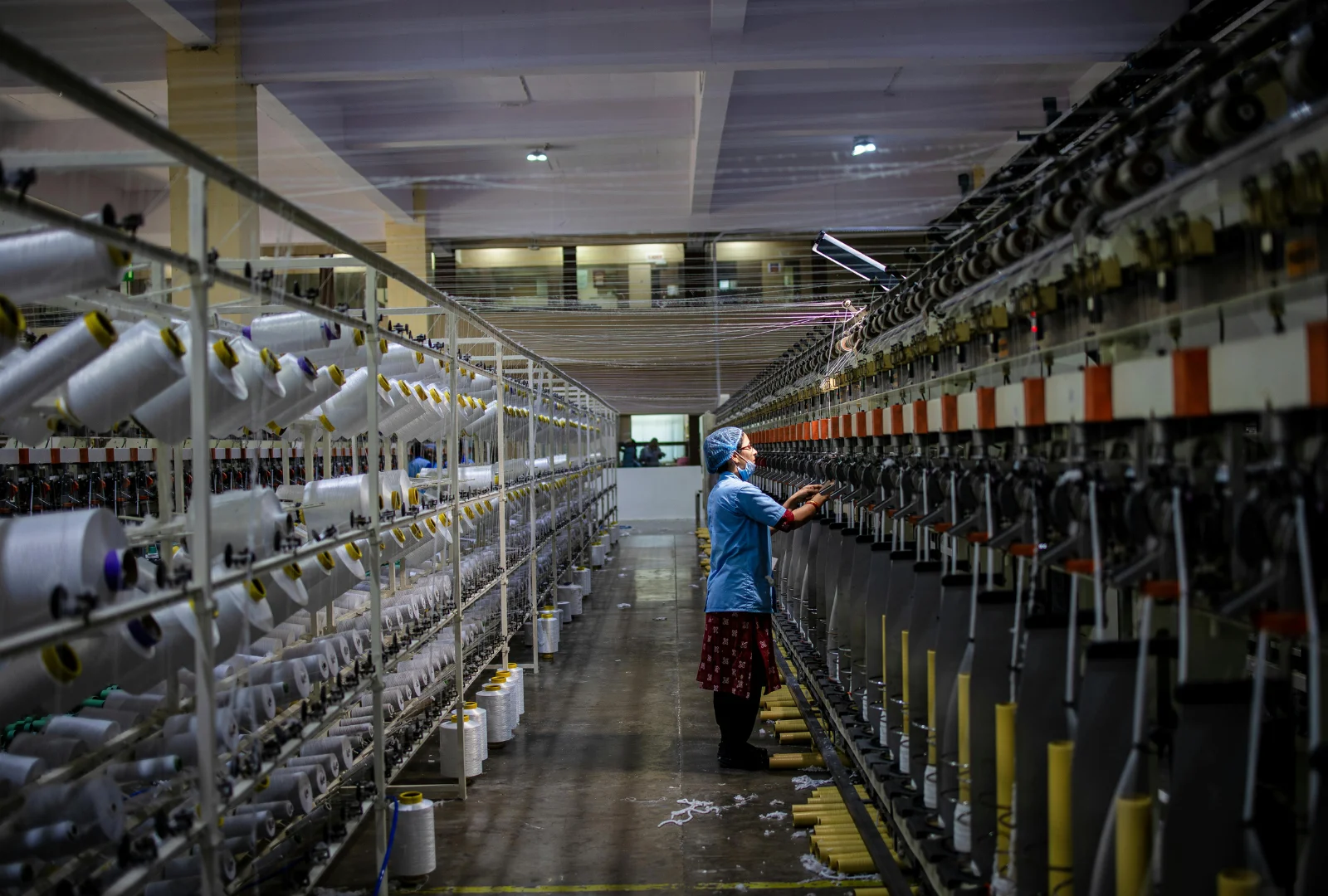
A small mistake made by a worker filled with anxiety at the start of their shift can lead to hundreds of meters of fabric having to be reprocessed. That mistake means machines have to be restarted for hours. Another worker’s lack of motivation slows down production, which means consuming more energy over a longer period of time. In short, the weight of emotions is reflected in our environment as an invisible carbon load.
Erhan BAYKAN, Sustainability Consultant, Senior Compliance Auditor
Consider the operation of a factory. Machines are working rhythmically, fabrics are flowing on the production line, steam is rising from chemical tanks. Experts calculating the carbon footprint measure all of this: electricity consumption, liters of water, kilograms of waste produced.
On the other hand, there is something else invisible inside that factory: people’s fatigue, stress, and resentment. A small mistake made by a worker filled with anxiety at the start of a shift can lead to hundreds of meters of fabric having to be reprocessed. That mistake means the machines have to be restarted for hours. Another worker’s lack of motivation slows down production, which means consuming more energy over a longer period. In short, the weight of emotions reflects on our environment as an invisible carbon load.
I call this “Emotional Carbon”: the environmental footprint left by people’s moods at work. Environmental sustainability is mostly discussed in terms of numbers. However, there is an invisible force that shapes these numbers, and that is the psychology of employees.
Loss of morale increases production errors.
Stress and burnout increase absenteeism.
High staff turnover requires constant new hiring and training, which means additional energy, documentation, and logistics.
In fact, this “emotional waste” accumulating in the workplace carries as much of a real burden as the physical waste reflected in the environment. Although no report has yet included a heading such as “emotional carbon,” research conducted in recent years points to an invisible connection:
Heat stress reduces work productivity. Performance losses occur at temperatures above 24-26 °C. This translates to longer shifts and increased energy consumption (World Economic Forum, 2023).
Building design affects employee psychology and productivity. Buildings with high thermal mass protect the workforce during heat waves and reduce energy consumption (Springer, 2024).
Green human resources practices increase employee engagement, leading to fewer errors, less waste, and more sustainable production (ScienceDirect, 2024).
Science tells us that people’s moods directly affect the carbon footprint of production processes.
How Do We Calculate Emotional Carbon?
Today, carbon footprint measurements are based on energy, water, and raw materials. But what if we included human emotions?
Happiness index: Employee morale should be measured regularly.
Error and rework rates: The energy and material cost of each error should be calculated.
Staff turnover rate: The logistics and training processes for new hires should be linked to environmental costs.
Absenteeism rates: The carbon equivalent of work disruptions should be reported.
In this way, sustainability reports can account for the invisible impact of people, not just machines. The stress experienced by a worker during the morning shift may result in several kilograms of fabric waste in the afternoon. When that fabric is reprocessed, it will consume extra energy and water. That energy will be drawn from the power grid; that electricity may have been generated from coal or natural gas. Result: The chain that starts with a worker’s mood will extend all the way to carbon dioxide in the atmosphere.
This is “emotional carbon,” an invisible footprint that affects not only the individual but also our planet.
Including Emotions for True Zero Waste
Sustainability cannot be achieved solely by using machines efficiently. When we ignore people’s emotions, physical gains are quickly lost. Investing in the well-being of employees is actually one of the most important investments we can make for the planet.
Perhaps a new heading will appear in future reports: “Emotional Carbon.” When that day comes, we will achieve environmental sustainability not only by eliminating physical waste but also by eliminating invisible emotional waste.